Lion's Mane vs. Adderall: What the Research Actually Says
Lion's Mane vs Adderall: what the research actually says. Different mechanisms (NGF vs dopamine), timelines, and risks — and where each realistically fits.
The comparison between Lion's Mane mushroom and Adderall (amphetamine salts) keeps appearing in functional wellness communities — partly because they address some overlapping goals (focus, cognitive performance, reduced brain fog) and partly because there is a growing cohort of people seeking alternatives to prescription stimulants for cognitive support. This post aims to give the most accurate, research-grounded answer to this comparison rather than either overselling Lion's Mane or dismissing the question.
The short answer: Lion's Mane and Adderall work through entirely different mechanisms, produce different types and magnitudes of cognitive effects, and serve fundamentally different purposes. Comparing them directly is somewhat like comparing a strength training program to a sports car — both improve performance, but not in the same way or on the same timeline.
How Adderall Works
Adderall is a mixture of amphetamine salts (75% dextroamphetamine, 25% levoamphetamine) that primarily functions by:
- Triggering large releases of dopamine and norepinephrine from presynaptic neurons, flooding the reward and attention circuitry with these neurotransmitters
- Blocking the reuptake of dopamine and norepinephrine, keeping them active in synapses longer than normal
- Additionally inhibiting monoamine oxidase (MAO), reducing the breakdown of these neurotransmitters
The net effect is a dramatic, rapid increase in dopamine and norepinephrine signaling throughout the prefrontal cortex and reward circuits. This produces:
- Significantly enhanced focus and sustained attention (often within 30–60 minutes of dosing)
- Improved executive function — planning, working memory, impulse control
- Reduced distractibility
- Increased motivation and drive
For people with ADHD, these effects normalize dopamine signaling that is pathologically underactive, allowing attention and executive function to operate closer to neurotypical levels. For people without ADHD, the effects are pharmacologically similar but the baseline dopamine system is already functioning in a normal range, which changes the benefit-risk calculation significantly.
How Lion's Mane Works
Lion's Mane (Hericium erinaceus) operates through an entirely different and much slower mechanism. Its primary bioactive compounds — hericenones (from the fruiting body) and erinacines (from the mycelium) — are small enough to cross the blood-brain barrier and stimulate the synthesis of Nerve Growth Factor (NGF) and Brain-Derived Neurotrophic Factor (BDNF).
NGF and BDNF are neurotrophic factors — proteins that regulate the growth, maintenance, and survival of neurons. They support the health of cholinergic neurons (important for memory and learning), promote dendritic branching (expanding the neural network complexity associated with cognitive capacity), and support remyelination of damaged nerve fibers.
The cognitive effects of Lion's Mane are therefore not from acute neurotransmitter flooding but from structural neural support — improving the infrastructure of cognition rather than temporarily flooding the system with signaling chemicals.
Key research findings:
- Ratto et al. (2019) — a double-blind randomized controlled trial — found that Lion's Mane supplementation significantly improved attention, concentration, and cognitive function in healthy young adults over 8 weeks compared to placebo
- Mori et al. (2009) found that Lion's Mane significantly improved mild cognitive impairment scores in adults aged 50–80 over 16 weeks, with scores declining after supplementation stopped
- Multiple animal studies have shown Lion's Mane increases NGF mRNA expression in hippocampal tissue, with resulting improvements in spatial memory and learning tasks
For the complete Lion's Mane research breakdown, see our post on Lion's Mane for brain fog.
Side-by-Side Comparison
| Factor | Lion's Mane | Adderall |
|---|---|---|
| Onset of effect | 4–8 weeks (cumulative) | 30–60 minutes (acute) |
| Mechanism | NGF/BDNF stimulation (neuroplasticity) | Dopamine/norepinephrine flooding |
| Effect magnitude | Moderate, cumulative | Strong, acute |
| Tolerance | No known tolerance development | Significant; escalating dose common |
| Rebound effect | None | Significant cognitive/emotional rebound |
| Dependency risk | None documented | Schedule II controlled substance; significant |
| Cardiovascular effects | None significant | Increased heart rate, blood pressure |
| Sleep disruption | None; may improve sleep quality | Significant; insomnia common side effect |
| Appetite effects | None | Significant appetite suppression |
| Legal status | Legal supplement (no prescription) | Schedule II prescription only |
The Depth of Focus: Different Types of Attention
One qualitative difference worth understanding: Adderall and Lion's Mane tend to produce different types of focus. Adderall's dopamine flooding tends to produce intense, narrow, sometimes rigid focus — excellent for task completion and working through a defined set of actions, but sometimes less suited for creative, associative, or flexible thinking that requires moving between ideas and making unexpected connections.
Lion's Mane's NGF-mediated neuroplasticity support tends to produce a cleaner, more flexible cognitive state — better baseline attention and sustained concentration without the tunnel-vision quality that can make Adderall's focus feel forced rather than natural. This is anecdotal and not directly studied comparatively, but it is a commonly reported experiential difference that has mechanistic plausibility.
Who Should Consider Lion's Mane vs. Adderall
Lion's Mane may be appropriate for:
- Healthy adults seeking gradual, cumulative cognitive enhancement without prescription medication
- People experiencing brain fog, mild cognitive decline, or reduced mental clarity
- People who find caffeine-based cognitive support insufficient but want to avoid prescription stimulants
- People whose cognitive performance goals are better served by building long-term neurological capacity than by acute chemical boosting
Adderall is a prescription medication appropriate for:
- People diagnosed with ADHD by a qualified physician and for whom the benefits of amphetamine treatment have been determined to outweigh the risks in their specific case
- It is not appropriate for use without a prescription, is illegal to obtain without one, and carries significant dependency and cardiovascular risks in non-medical use
Lion's Mane is not a replacement for Adderall in people with clinically significant ADHD. The mechanisms are different and the magnitude of cognitive effect in ADHD is not equivalent. For people without ADHD who are using stimulants for cognitive enhancement, Lion's Mane offers a meaningfully different risk-benefit profile. See also our post on Nootropics 101 for the broader landscape of cognitive support options.
Frequently Asked Questions
Does Lion's Mane affect dopamine?
Not directly through the same mechanism as Adderall. Lion's Mane's NGF stimulation supports the health of cholinergic neurons (ACh system) and may indirectly affect dopamine signaling through neuroplasticity improvements. Animal studies have shown some Lion's Mane effects on dopaminergic pathways, but this is not the primary mechanism and the effect is fundamentally different from the acute dopamine flooding of amphetamines.
Can you take Lion's Mane with Adderall?
No clinically documented interaction between Lion's Mane and amphetamines exists. However, if you are taking prescription Adderall, adding any supplement should be discussed with your prescribing physician. The mechanisms are complementary rather than antagonistic in principle.
How long before Lion's Mane produces noticeable cognitive effects?
Most research shows effects beginning to emerge at 4–6 weeks of daily supplementation, with more pronounced effects at 8–12 weeks. Unlike Adderall, Lion's Mane is not an acute one-dose intervention; it is a daily supplement that builds neurological capacity over time.
The Bottom Line
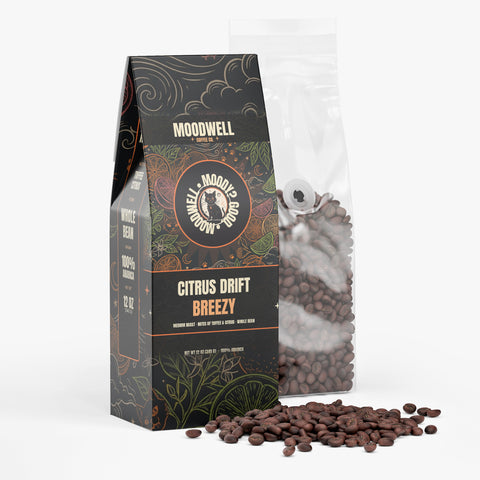
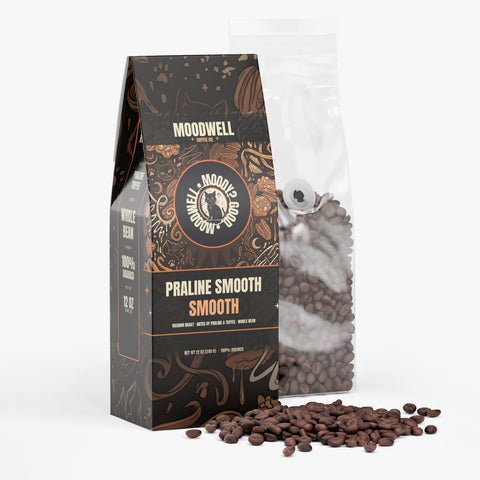
Lion's Mane and Adderall are not competing treatments for the same problem — they operate through different mechanisms, on different timelines, with vastly different risk profiles. Lion's Mane builds neural infrastructure gradually and safely; Adderall floods neurotransmitter systems acutely and powerfully. For people without ADHD seeking cognitive support, Lion's Mane in functional coffee like MoodWell HUSTLE offers a daily ritual that gradually improves attention capacity without the dependency, rebound, and systemic side effects of prescription stimulants.