
Where Coffee Comes From: Growing Regions Explained
Coffee only grows in a narrow band roughly 25°N to 30°S of the equator — the “coffee belt.” Inside that belt, altitude, climate, and processing shape flavor as much as roast level does, which is why a Brazilian and an Ethiopian coffee can taste nothing alike.
- Coffee belt
- 25°N–30°S of the equator
- Ripening time
- Up to 9 mo. at high altitude vs. 6–7 at low
- Moodwell origins
- 7 countries Brazil, Mexico, Guatemala, Colombia, Ethiopia, Indonesia, Papua New Guinea
- Arabica vs. robusta
- See guide species shapes where coffee can grow, too
Start Here
Coffee is a finicky plant. It only grows commercially in a narrow climate band, and where in that band a bean is grown has a bigger effect on its flavor than most people realize.
What is the “coffee belt,” and why does coffee only grow there?
What countries does Moodwell's coffee actually come from?
Do arabica and robusta grow in the same places?
The Coffee Belt
Coffee only grows well in a band of land roughly 25°N to 30°S of the equator, almost entirely inside the tropics. Inside that belt, two things do most of the work in shaping flavor: altitude and climate.
Higher elevation means cooler temperatures, which slows down how fast the coffee cherry ripens — up to 9 months at high altitude versus 6–7 months lower down. That slower ripening lets more sugars and flavor compounds build up inside the seed, producing a denser bean. Denser beans tend to brew brighter, more complex cups with more acidity. Lower-grown coffee ripens faster into a softer bean that usually brews heavier-bodied, lower-acid, and nuttier or more chocolatey.
Altitude predicts the direction flavor leans, not quality on its own — processing, roast level, and freshness all matter too. Climate and heat tolerance also shape which coffee species can grow where: arabica needs the cooler, higher-altitude end of the belt, while robusta tolerates more heat and lower elevation. That species difference — including caffeine and taste — is covered in full in our arabica vs. robusta guide.


Pick a Region
Moodwell sources from three parts of the coffee belt. Pick the one that matches a flavor you're curious about.
Central & South America
Our everyday, balanced coffees mostly come from Brazil, Mexico, Guatemala, and Colombia — the Central & South America bucket.
- Typical altitude
- 1,200–2,000m
- Flavor notes
- Balanced, nutty, chocolatey
- Acidity & body
- Bright acidity, medium body
- Known for
- Smooth, approachable everyday coffee
Most of our everyday blends (Deep Roast, Rich Hazelnut, Hemp Harvest, Vitality Mushroom, Molten Caramel, Praline Smooth) also draw from this region.
East Africa
We don't sell a single-origin Ethiopian coffee today, but Ethiopian beans appear in three of our brighter blends.
- Typical altitude
- 1,500–2,200m
- Flavor notes
- Bright, fruity, floral
- Acidity & body
- Wine-like acidity, lighter body
- Known for
- Vibrant, complex specialty character
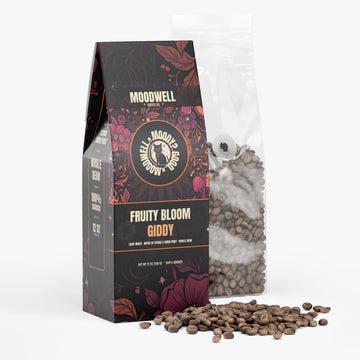
This is a blend that includes Ethiopian beans, not a single-origin Ethiopian coffee. Lemon Glaze and Citrus Drift also include Ethiopian beans.
Indonesia & the Pacific
Our earthiest, boldest coffees are real single-origin Indonesia and Papua New Guinea lots.
- Typical altitude
- 750–1,500m
- Flavor notes
- Earthy, bold
- Acidity & body
- Low acidity, full body
- Known for
- Rich, heavy-bodied coffee
Forest Decaf (Sulawesi, Indonesia) and Sweet Brew Instant (Papua New Guinea highlands) are also real single-origin lots from this region.
Compare the Regions
Here's how the three regions compare side by side:
| Region | Typical altitude | Flavor notes | Example Moodwell products |
|---|---|---|---|
| Central & South America | 1,200–2,000m | Balanced, nutty, chocolatey, bright acidity | Golden Nut Toffee (single-origin Brazil), Cherry Zest (single-origin Guatemala), Velvet Cocoa (single-origin Colombia) |
| East Africa | 1,500–2,200m | Bright, fruity, floral, wine-like acidity | Fruity Bloom, Lemon Glaze, Citrus Drift (all blends that include Ethiopian beans) |
| Indonesia & the Pacific | 750–1,500m | Earthy, bold, low acidity, full body | Forest Decaf (Sulawesi, Indonesia), Mushroom Fuse & Sweet Brew Instant (Papua New Guinea) |
Altitude and flavor ranges are general tendencies based on origin literature, not guarantees — growing conditions vary by farm and harvest, and processing and roast level matter too.

Origin & Labels
You'll usually see coffee labeled one of a few ways:
- Single-origin — from one known place. That can mean as broad as a whole country or as narrow as one farm, one field, or even one harvest day (sometimes called a micro-lot). There's no official global rulebook enforcing how narrow “single-origin” has to be, so it's worth checking what a roaster actually discloses.
- Blend — beans from more than one origin, combined to hit a flavor profile a single origin might not reach on its own. Most of Moodwell's everyday coffees are blends for exactly this reason.
You may also see the term “direct trade” on coffee bags. It sounds like a certification, but it isn't one — there's no standard definition or independent verification body behind it. In practice it usually means a roaster negotiated more directly with a producer or exporter, skipping some of the traditional import chain, but it still relies on importers and exporters for logistics, and it isn't automatically more ethical or higher-paying than any other sourcing relationship. We don't use the term “direct trade” for Moodwell's coffee. What we do disclose is the actual origin — the country or countries — on every product page, whether that's a single-origin lot or a blend.
Next: shop by origin ↓Shop by Origin
If you want to taste a specific origin rather than a blend, these are Moodwell's real single-origin coffees — one from each region we source from.
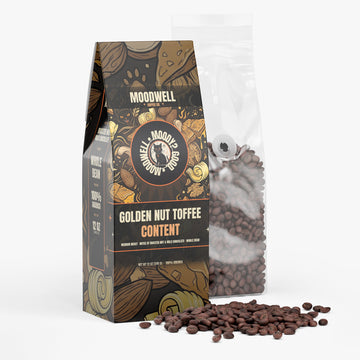
Single-origin Cerrado, Brazil — roasted peanut and soft milk chocolate, the Central American profile in one bag.
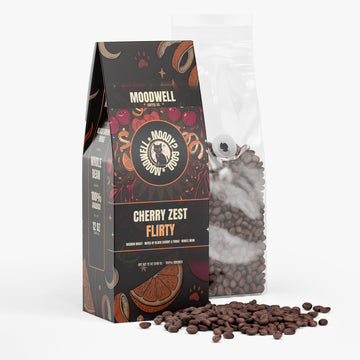
Single-origin Huehuetenango/Antigua, Guatemala — black cherry and fudge, slightly brighter than our Brazil lot.
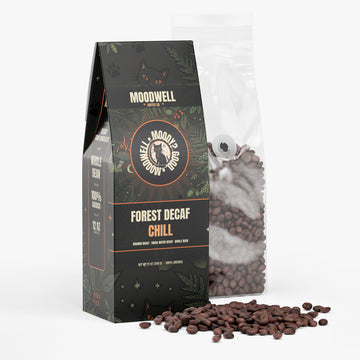
Single-origin Sulawesi, Indonesia, decaffeinated — dark chocolate and earthy richness, true to the region, minus the caffeine.
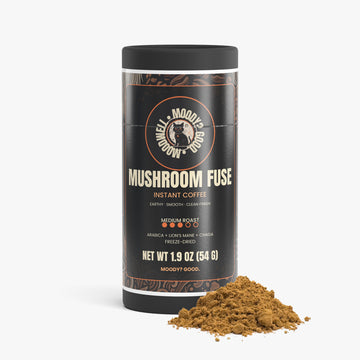
Single-origin Papua New Guinea instant — earthy and smooth, ready in seconds.
Velvet Cocoa (single-origin Huila & Cauca, Colombia) and Sweet Brew Instant (single-origin Papua New Guinea highlands) are also single-origin, if you want to keep exploring.
Climate & the Future
Where coffee can be grown isn't fixed. A 2015 peer-reviewed modeling study (Bunn et al., published in PLOS ONE) projected that climate change will shrink and shift the land suitable for arabica in major producing countries by mid-century — with net declines projected in parts of Brazil, Vietnam, Indonesia, India, and Central America, while some higher-altitude or higher-latitude areas may become newly suitable. The study frames this as a range of modeled outcomes across scenarios, not a single fixed prediction, and later coverage (including Carbon Brief's reporting on climate impacts on coffee growers) has highlighted the same trend in plainer language.
What that means in practice: the regions we talk about above aren't necessarily permanent. Growing regions can shift over the coming decades as climate conditions change, which is part of why traceable, disclosed origins — knowing where your coffee is actually from today — matters more over time, not less.
FAQ
What is the “coffee belt” and why does coffee only grow there?
The coffee belt is the band of land roughly 25°N to 30°S of the equator. Coffee needs the mild temperatures, humidity, rainfall pattern, and soil that mostly only occur inside that band, which is why it isn't grown commercially much outside it.
What countries grow the most coffee?
Brazil and Vietnam are the two largest producers globally, followed by Colombia, Indonesia, and Ethiopia among others. Moodwell sources from Brazil, Mexico, Guatemala, Colombia, Ethiopia, Indonesia, and Papua New Guinea.
Why does Ethiopian coffee taste different from Brazilian coffee?
Different altitude, climate, soil, and processing. Ethiopian coffee, grown higher and in East Africa's climate, tends to be bright, fruity, and floral. Brazilian coffee, often grown lower, tends to be nuttier, more chocolatey, and lower in acidity.
Does altitude really change how coffee tastes?
Yes, broadly. Higher altitude slows how fast the cherry ripens, which lets more sugar and flavor compounds build up in the bean — generally producing brighter, more complex, higher-acid coffee. Lower altitude usually means a heavier-bodied, lower-acid, nuttier cup. Altitude sets a direction, though — processing, roast, and freshness all matter too.
What's the difference between single-origin and blended coffee?
Single-origin coffee comes from one known place — that can be as broad as a country or as narrow as one farm or harvest day. A blend combines beans from more than one origin to hit a flavor a single origin might not reach alone.
Is single-origin coffee better than a blend?
Not inherently — they're different goals. Single-origin highlights one place's specific character; a well-made blend can be more balanced or consistent cup to cup. Most of Moodwell's everyday coffees are blends for exactly that reason, while a few of our coffees are single-origin for people who want to taste one place specifically.
What does “Origin: Brazil” or “Single origin, Colombia” actually mean on a bag?
It means the beans inside came from that country (or, for a narrower claim, that specific region or farm). There's no global enforcement body standardizing exactly how specific that claim has to be, so it's worth checking what the roaster actually discloses rather than assuming a single standard.
What does “direct trade” coffee mean, and is it the same as traceable?
“Direct trade” has no standard definition or independent certification — it generally means a roaster negotiated more directly with a producer, skipping some of the traditional import chain, though importers and exporters are usually still involved in logistics. It isn't automatically more ethical, higher-paying, or more traceable than other sourcing — that depends on what a specific roaster actually discloses. Moodwell doesn't use the term “direct trade”; we disclose the origin country or countries on every product page instead.
Why does Central/South American coffee often taste chocolatey or nutty?
It's partly altitude (much of our Central & South American sourcing sits at 1,200–2,000m, a bit lower than East Africa's typical range) and partly regional soil and climate. That combination tends to produce rounder, nuttier, more chocolate-forward cups with softer acidity.
Why is Indonesian coffee described as earthy or full-bodied?
Indonesian and Pacific coffee is often grown at somewhat lower altitude (roughly 750–1,500m in our sourcing) and frequently uses processing methods common to the region that tend to produce a heavier body, lower acidity, and earthier, bolder flavor.
Is climate change affecting where coffee can be grown?
Peer-reviewed modeling (Bunn et al., 2015) projects that climate change will shrink and shift the land suitable for arabica in several major producing regions by mid-century, with both losses and some newly suitable higher-altitude areas. It's an ongoing, modeled trend with a range of outcomes, not a single fixed number.
Do arabica and robusta grow in the same places?
Not usually — arabica needs cooler, higher-altitude conditions, while robusta tolerates more heat, drought, and lower elevation. That's a difference in the plant species itself. See our arabica vs. robusta guide for the full comparison, including caffeine and taste.
Sources
- Sprudge — What is the Coffee Belt?: coffee belt latitude range and growing conditions
- VinePair — The World's Coffee & Wine Belts: map reference corroborating belt latitude
- Peet's — The Geography of Coffee: general regional geography framing
- Seattle Coffee Gear — Growing Altitude and Why It Changes the Cup: altitude, ripening time, and flavor direction
- Seattle Coffee Gear — Coffee Farm Elevation: altitude-band terminology
- Coffee Review — Ethiopia origin reviews: East African bright/fruity/floral flavor profile
- Bunn et al., 2015 (PMC) — Projected Shifts in Coffea arabica Suitability: peer-reviewed climate-change modeling on growing regions
- Carbon Brief — coverage of climate impacts on coffee growers: plain-language companion coverage of the climate-shift research
- Royal Coffee — What Does Direct Trade Actually Mean?: direct trade has no standard definition or certification
- Wikipedia — Single-origin coffee: single-origin vs. blend definitions and labeling tiers
- Clive Coffee — What is Direct Trade Coffee?: consumer-facing companion explainer on direct trade
Altitude and flavor ranges above reflect general tendencies from origin literature, not a guarantee for any specific bag — growing conditions vary by farm, harvest, and year, and processing and roast level shape the final cup too. We don't use the term “direct trade” for Moodwell's coffee; what we disclose is each product's actual origin country or countries.
Keep reading: our arabica vs. robusta guide (coming soon), how to brew whole bean coffee, and cold brew & iced coffee.