
Groggy, Grumpy, Barely Awake? A Morning Coffee Guide
You are not broken, you are probably in sleep inertia: the groggy, slow, short-tempered stretch that usually lasts 15 to 60 minutes after waking. Light, a regular wake time and a cup of coffee help. Pick your coffee by how much time and effort you have: instant in about a minute, a drip or pour-over in 5 to 10 minutes, or a cold brew you made last night with no morning effort at all.
- Grogginess
- 15–60 min typical, sleep inertia
- Caffeine / 8 oz
- ~96 mg brewed (instant ~62)
- Fastest cup
- ~1 min instant coffee
- Zero effort
- Night before cold brew or milk brew
Start where you are
People rarely begin with a question about coffee. They begin with how the morning feels. Here are the questions we hear, answered plainly.
Why am I so grumpy in the morning?
Why am I still tired after a full night of sleep?
How do I wake up faster?
My husband or partner is always tired and checked out in the morning.
I am wiped out after the morning rush of getting the kids out the door.
Why mornings feel like this
The first hour of the day is not your sharpest, and that is biology, not a character flaw.
Sleep inertia is the grogginess, disorientation and impaired thinking that follow waking. Researchers do not fully know its cause. Leading ideas include leftover slow-wave brain activity and a build-up of adenosine, a chemical that makes you feel sleepy. It slows reaction times, hurts attention and makes decisions harder, and it is stronger after sleep deprivation, shift work or a long nap (Sleep Foundation).
So the goal of a wake-up coffee is not to power through a bad mood. It is to make the first hour easier: little effort, a taste you enjoy, and caffeine at a level that suits you.
Next: how are you feeling? ↓How are you feeling?
Your morning decides what coffee is right for you. Tap the one that sounds like yours.
I just need it now
You are barely upright. You want coffee in your hand with no thinking and no cleanup.
- Time
- About 1 minute
- Effort
- Almost none
- Caffeine
- About 62 mg per 8 oz (instant)
- Should feel
- Gentle, steady lift, no harshness
Caffeine figure is the Mayo Clinic average for instant coffee. Our label has the serving details.
I am rushing: kids, commute, a train to catch
You have maybe five minutes and your hands are full. You need a cup that is ready when you are.
- Time
- 0 to 5 minutes
- Effort
- Prep the night before
- Caffeine
- About 96 mg per 8 oz (brewed)
- Should feel
- Smooth and sweet, easy to sip on the move
Prefer something warm? Use a drip machine with a timer and grind the beans the night before.
I have 15 minutes and I want it to feel good
You are not in a hurry. The cup is the first nice thing of your day.
- Time
- 10 to 15 minutes
- Effort
- A little, and it is the point
- Caffeine
- About 96 mg per 8 oz (brewed)
- Should feel
- Warm, sweet, calming
A pour-over or French press turns the wait into a small ritual.
Coffee makes me jittery or upsets my stomach
You love the ritual but not the shakes. You want it gentle.
- Time
- 5 to 10 minutes
- Effort
- Low
- Caffeine
- Go small, or half-caf
- Should feel
- Mellow, no sharp edges
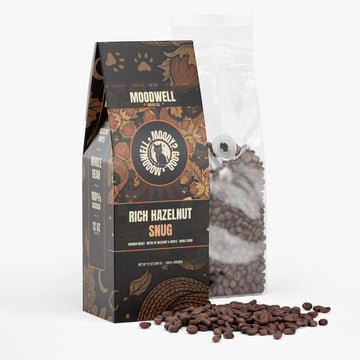
Try half regular and half Forest Decaf. Evidence that low-acid coffee is gentler is mixed, so treat this as something to test, and talk to a health care provider about ongoing stomach trouble.
Time and effort
Time and effort are the real price of a morning cup. Here is the trade, from fastest to slowest.
| Method | Time in the morning | Effort | Caffeine (8 oz, average) | Good for |
|---|---|---|---|---|
| Cold brew or milk brew, made last night | 0 minutes | 5 minutes the night before | Varies with strength | Rushed mornings. Cold brew · Milk brew |
| Instant coffee | About 1 minute | Almost none | About 62 mg | Zombie mornings, the office desk |
| Drip machine | 5 to 10 minutes | Low (grind, scoop, press) | About 96 mg | Everyday. Brew guide |
| French press or pour-over | 10 to 15 minutes | Medium | About 96 mg | Slow starters who want a ritual |
Times are our estimates. Caffeine averages are from the Mayo Clinic; actual caffeine varies by bean, strength and cup size. An 8 oz cup of brewed coffee averages about 96 mg, instant about 62 mg, and decaf very little.
What does it cost?
A 12 oz (340 g) bag makes about 17 cups at 20 g of coffee per cup, so each bag below shows its real cost per cup on the card. Subscribing or buying several bags brings it down further. Orders of $40 or more ship free in the United States.
Next: caffeine and how it feels ↓Caffeine and how it feels
Caffeine is the part everyone asks about: how much, how fast, and how it should feel.
- What it does. Caffeine blocks adenosine receptors, which is why you feel more alert (Sleep Foundation).
- How much is okay. The FDA says about 400 mg a day, roughly two to three 12 oz cups of coffee, is generally not associated with negative effects for most adults. People vary a lot in how strongly they react and how fast they clear caffeine (FDA). If you are pregnant, trying to be, or breastfeeding, ask your health care provider.
- How it should feel. A steady lift, not shaking. If you feel jittery, use a smaller cup, drink it with food, or switch to half-caf.
Should I wait 90 minutes after waking?
You will see advice to delay your first cup because of cortisol. Honest answer: the evidence is weak. One health-system article that gives this advice itself says there is no scientific evidence for a single best time to drink coffee, and that trial and error may help (A Healthier Michigan). If coffee right away makes you jittery, try waiting 30 to 60 minutes or having breakfast first and see how you feel. If it works fine for you, there is no need to wait.
What to eat with it
A cup with a little food is gentler for many people. Our pairing suggestions, based on tasting notes: Golden Nut Toffee with banana or blueberry muffins, Praline Smooth with cinnamon rolls or croissants, Velvet Cocoa with a chocolate pastry.
Next: your beans ↓Your beans
Six coffees we would reach for in the morning, with how long each takes and what a cup costs.
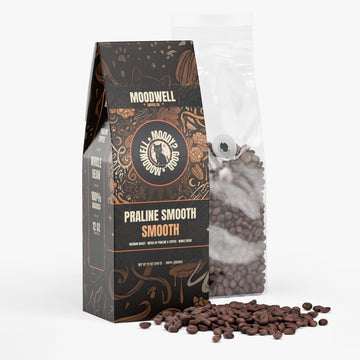
Nutty praline and gentle toffee. Easy to love, and very forgiving if you brew half asleep.
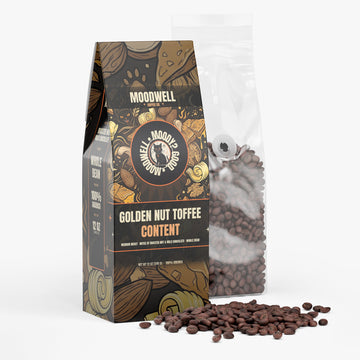
Roasted peanut, soft milk chocolate and honey-like sweetness. Low acidity.
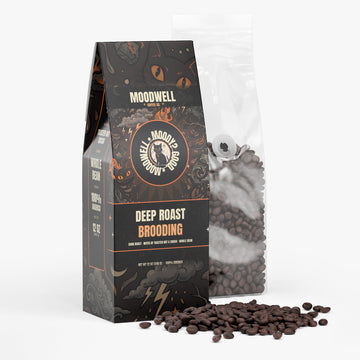
Toasted nuts and cocoa with a round finish. Strong and simple for gray mornings.
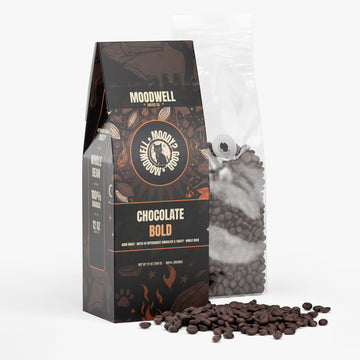
Bittersweet chocolate and a toasty finish. Bold, for a big day.
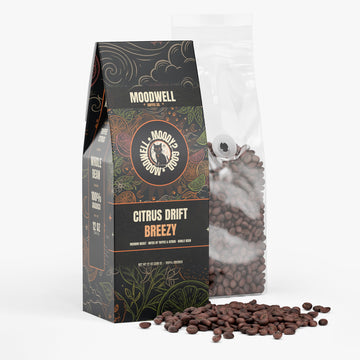
Toffee sweetness and a citrusy lift. The one to cold brew the night before.
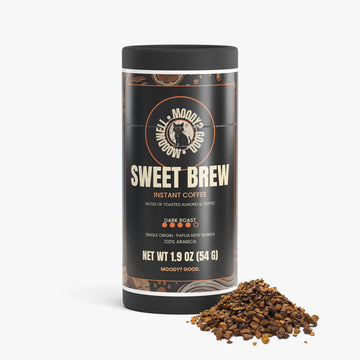
Instant with toasted almond richness. Ready in about a minute.
Not sure which? Take the mood quiz or see all coffees. Want to know why they taste like cherry or toffee? Read this.
If it is more than coffee
Coffee helps a groggy morning. It cannot fix a tired life.
If you are exhausted every day, struggle to stay awake, or your sleep is poor for weeks, that is worth a conversation with a health care provider, not another cup. Habits that help ordinary morning grogginess: the same wake-up time every day, light soon after waking, a gentle alarm, short naps and a cool bedroom (Sleep Foundation). Many people also find that a small morning ritual, a cup they look forward to, makes the first hour kinder.
This page is general information, not medical advice.
Morning questions
Why am I so grumpy in the morning?
Right after waking, most people experience sleep inertia: grogginess, disorientation and slower thinking that typically lasts 15 to 60 minutes and can last a few hours. Short sleep or waking suddenly from deep sleep can make it stronger.
Why am I tired after a full night of sleep?
Sleep inertia can make you feel foggy and tired for up to an hour or more after waking, even after enough sleep. If you feel exhausted most days, talk to a health care provider.
What is the best coffee to wake up to?
It depends on your morning. For speed, instant. For no morning effort, cold brew made the night before. For a calm ritual, a pour-over of a smooth medium roast like Golden Nut Toffee. For strength, a dark roast like Deep Roast.
How much caffeine is in a cup of coffee?
The Mayo Clinic lists about 96 mg in 8 oz of brewed coffee, about 62 mg in 8 oz of instant coffee, and very little in decaf. Actual amounts vary by bean, strength and cup size.
How much coffee is too much?
The FDA says about 400 mg of caffeine a day, roughly two to three 12 oz cups of coffee, is generally not associated with negative effects for most adults, though people vary widely. Pregnant people should ask a health care provider.
What is the fastest way to make coffee in the morning?
Instant coffee takes about a minute. Cold brew or milk brew made the night before takes no time in the morning.
Should I wait 90 minutes before my first coffee?
The evidence is weak. Some people feel less jittery if they wait or eat first, but there is no scientific proof of a single best time. Try it and see what works for you.
What coffee is gentle if I get jittery or have a sensitive stomach?
Try a smaller cup with breakfast, a mellow low-acid medium roast like Golden Nut Toffee or Rich Hazelnut, or half regular and half decaf. Evidence that low-acid coffee is easier on the stomach is mixed, so test it yourself.
How much does a cup of coffee cost at home?
A 12 oz bag makes about 17 cups at 20 g per cup, so each cup costs about the bag price divided by 17. Each bag on this page shows its own cost per cup.
Can I make coffee the night before?
Yes. Cold brew and milk brew are made in the fridge overnight and are ready to pour in the morning. Hot coffee is best brewed fresh.
Is decaf okay in the morning?
Yes. Decaf has very little caffeine, so it suits sensitive people or a second cup. It still has the taste and the ritual.
How do I wake up faster without coffee?
Keep a regular wake-up time, get natural light soon after waking, use a gentle alarm and keep naps under 30 minutes.
Sources
- Sleep Inertia – Sleep Foundation: definition, duration, causes and tips
- Caffeine content for coffee, tea, soda and more – Mayo Clinic: caffeine per cup and the 400 mg guideline
- Spilling the Beans: How Much Caffeine Is Too Much? – FDA: 400 mg a day, individual differences, pregnancy
- Why You Should Wait a Few Hours Before That Morning Cup of Coffee – A Healthier Michigan: the delay-your-coffee idea and its limits
This page is general information, not medical advice. Time estimates, cost per cup and pairings are our own calculations and suggestions from each coffee's tasting notes, not clinical or taste-test results.
Keep reading: Milk brew · Cold brew and iced coffee · Mood quiz · All guides