
Oat milk brew
The easy dairy-free swap. Same 1:10 ratio with oat milk, tasted at 8–10 hours. Vanilla oat is sweeter. Best with a mellow medium roast.
Method adapted from ispillice and Tasting Table.
Milk brew is coffee steeped in cold milk instead of water. Stir about 1 part medium-coarse ground coffee into 8 to 14 parts cold milk by weight, refrigerate for 10 to 16 hours, strain through a paper filter, and pour over ice. It tastes rounder and sweeter than water-based cold brew.
It is cold brew with one swap: milk does the job the water usually does. The coffee steeps slowly in the fridge, the grounds come out in the morning, and what is left is a creamy, naturally sweet coffee that already tastes like a latte.
Both, depending on what you mean. Most written sources place the technique in Japan, where specialty cafes such as Kurasu in Kyoto and Koffee Mameya in Tokyo made it a menu item. The moment is Korean-flavored: Korea Times reports that milk-forward “kkosup” lattes went viral on social media as drinkers got tired of iced lattes that turn thin and watery as the ice melts. An industry report on K-cafe drinks puts Korean-inspired beverages among the fastest-growing categories on North American menus. TikTok creators often call the method a “Korean Japanese milk brew,” and that is a fair way to put it.
| Cold brew | Milk brew | Iced latte | |
|---|---|---|---|
| Liquid | Water | Milk | Hot espresso + milk |
| How long | 12–24 hrs | 10–16 hrs | Minutes |
| Heat | None | None | Hot-pulled shot |
| Body | Clean, light | Creamy, full | Creamy, thins as ice melts |
| Equipment | Jar, filter | Jar, filter | Espresso machine |
New to cold coffee? Start with our guides to cold brew and iced coffee and cold brew flavors, or see how milk brew fits the wider wave in TikTok coffee trends 2026.
Next: pick your pour ↓Two choices shape the whole drink: the milk and the flavor you want. Tap one of each and the page will build your plan.
These pairings come from each coffee’s tasting notes and the roast advice in the sources below. They are starting points, not lab results, so adjust to your taste. Not sure? Take the Mood Quiz.
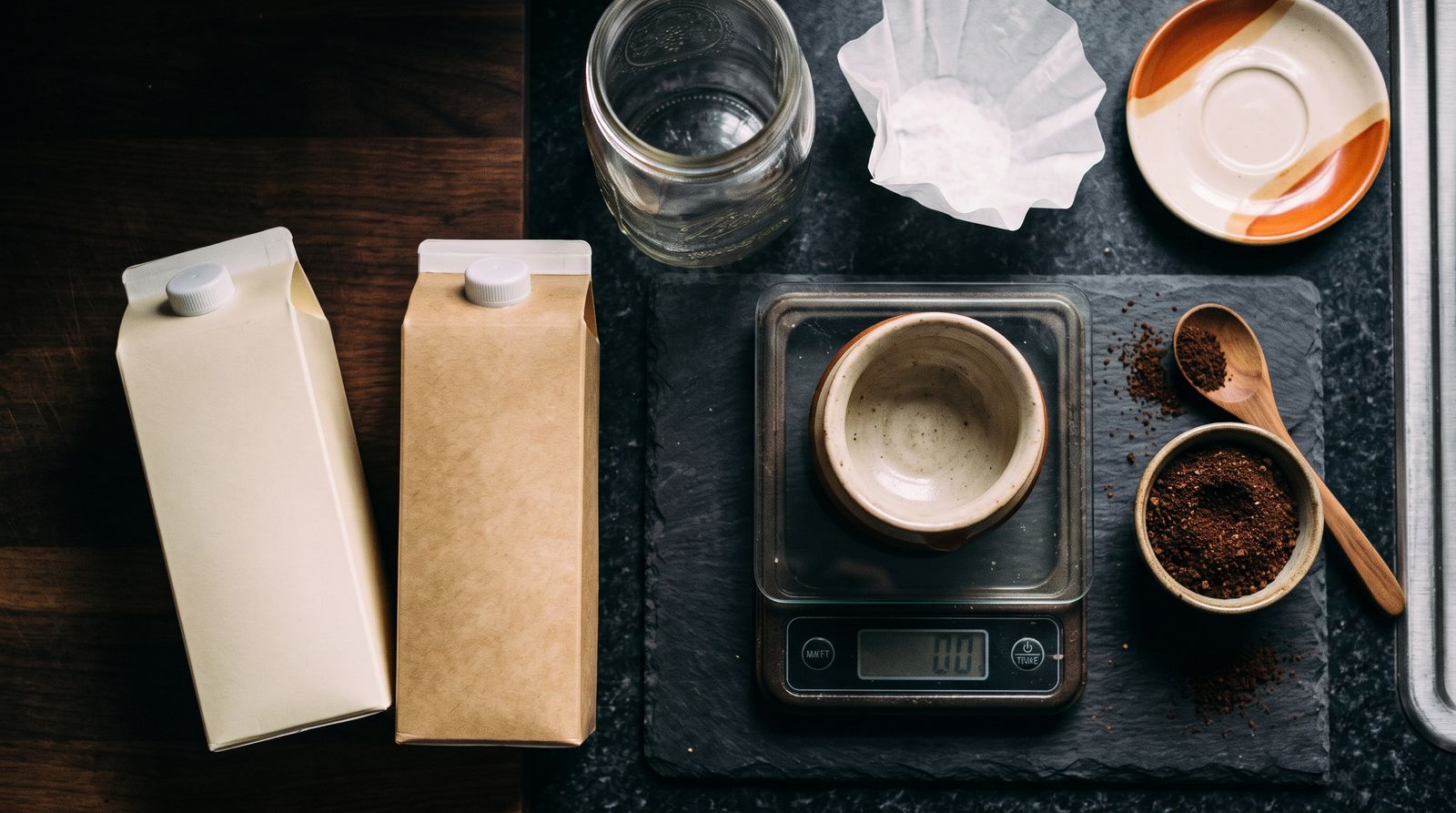
Fresh beans matter more than gear. Keep them airtight and away from light: how to store coffee beans.
Ten minutes of work tonight, a night in the fridge, and a ready-to-pour coffee in the morning.
Based on about 250 g of milk per serving. Published ratios run from about 1:8 to 1:14, and 1:10 is our balanced starting point.
Nutrition estimate (classic recipe, per serving of about 205 g): roughly 125 calories, 6.5 g protein, 6.8 g fat (3.9 g saturated), 9.8 g carbohydrate (10.5 g sugars as lactose in the milk) and 88 mg sodium. Estimated from USDA values for whole milk (61 calories, 3.2 g protein, 3.3 g fat and 4.8 g carbohydrate per 100 g), assuming the grounds keep about 90 g of milk so each of 2 servings is about 205 g. Brewed coffee adds almost nothing. Oat milk and cream versions vary by brand, so check your carton.
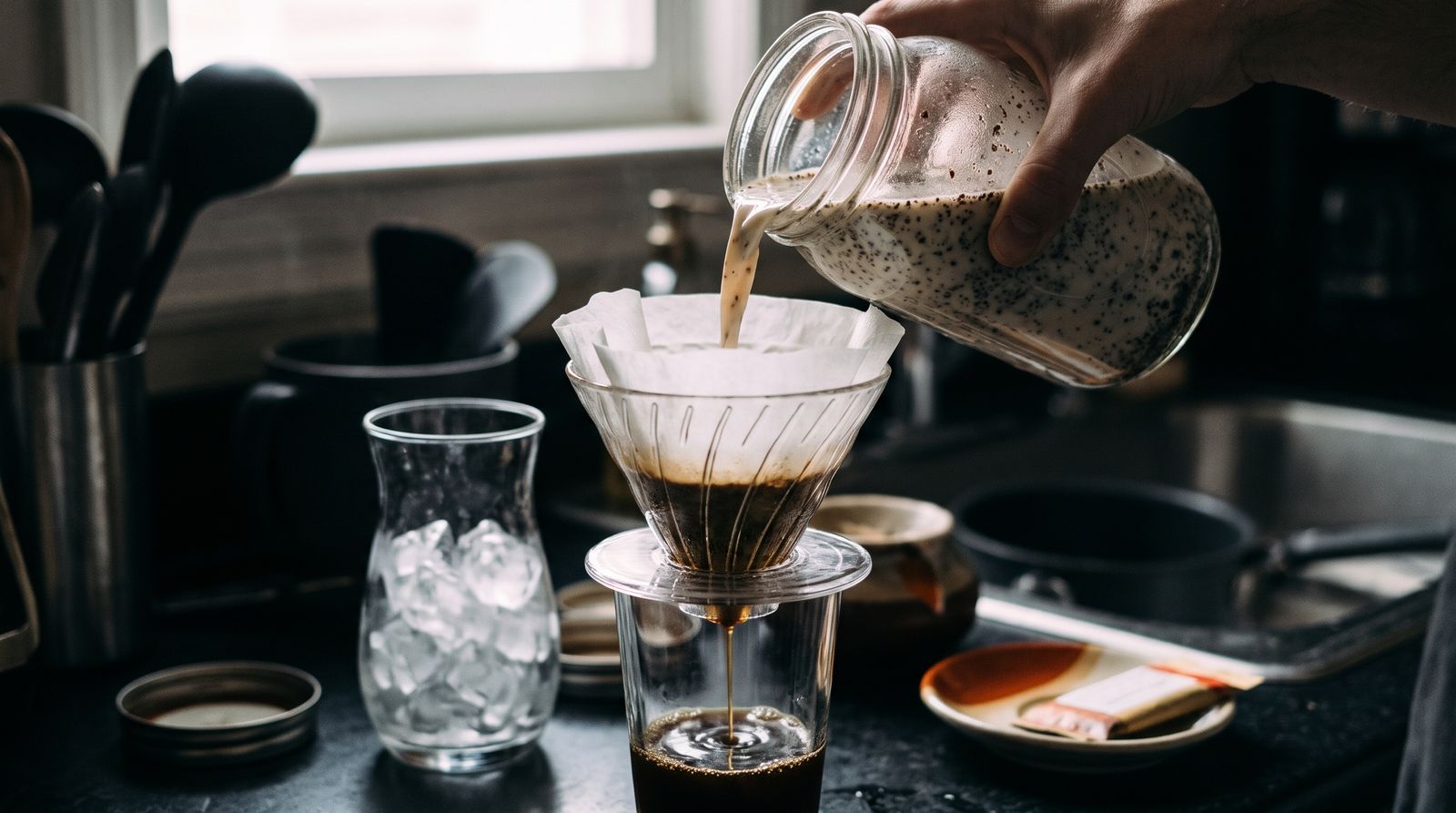
Morning. This is the part that makes it feel like a cafe drink.
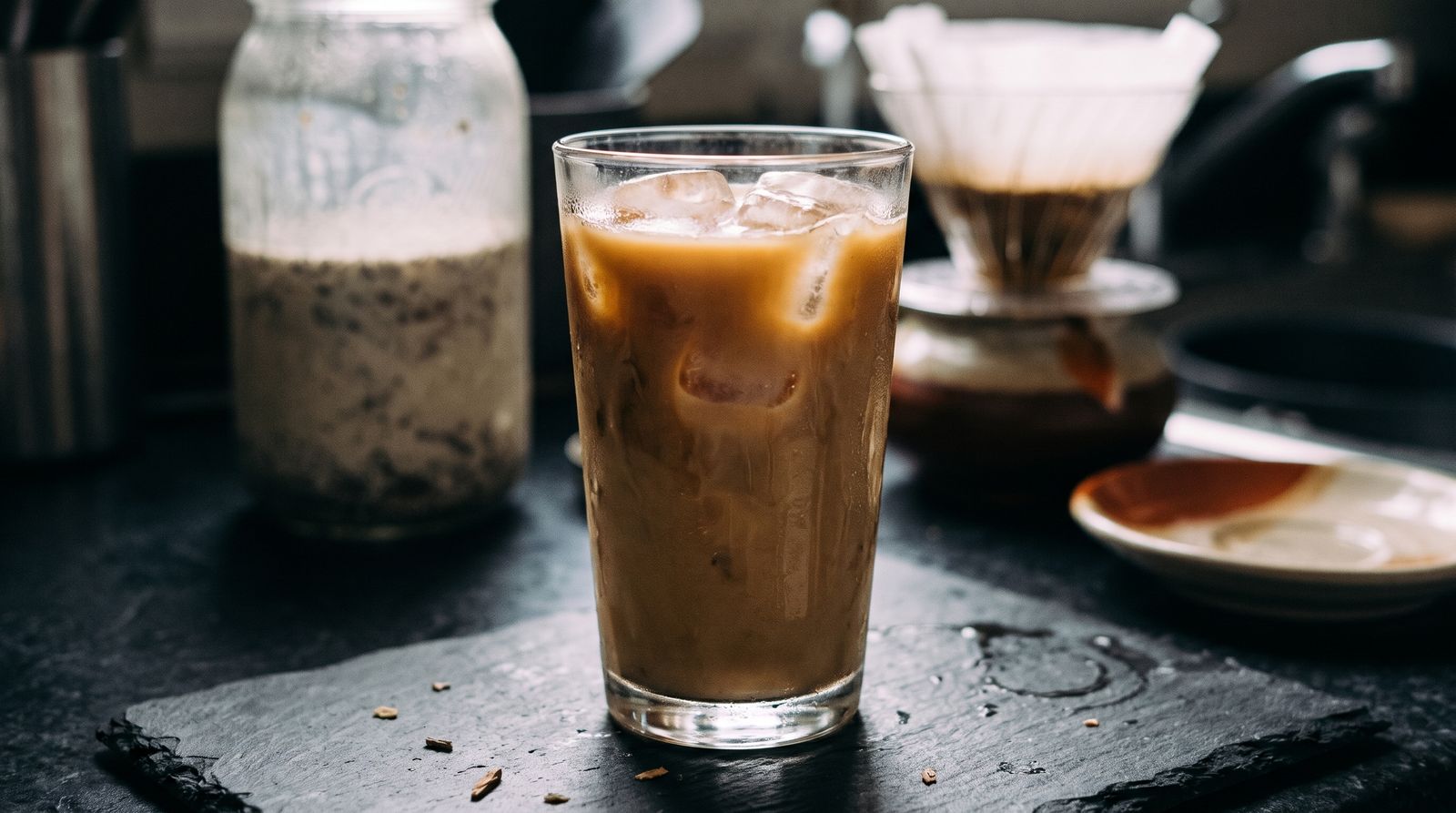
Skip the straining: steep in a French press and press in the morning, or tie the grounds in a filter bag or tea ball (ispillice suggests these shortcuts).
Next: riff on it ↓Once the base works, the trend has a lot of branches. Here are the ones worth trying, and where the originals live.
The easy dairy-free swap. Same 1:10 ratio with oat milk, tasted at 8–10 hours. Vanilla oat is sweeter. Best with a mellow medium roast.
Method adapted from ispillice and Tasting Table.Our adaptation of the Korean “nutty, rich” milk trend: strain your milk brew, then stir in a splash of heavy cream or a spoonful of sweetened condensed milk to thicken it. Home cooks in Korea use these tricks to make milk denser.
Trend described by Korea Times.A San Diego cafe steeps fruit-forward coffee in banana milk for a “banana bread” milk brew. At home, try a bright light roast like Fruity Bloom in banana milk.
Idea from Fresh Cup.The same overnight trick with tea bags in milk. Jasmine and strong black teas are popular, and some creators pour it over coffee.
See Food Network.A Korean cafe favorite: corn blended into sweetened milk, topped with salted caramel cold foam and strong coffee. It is a different method, but the same milk-first spirit.
Recipe at Java Momma.Cold brew coffee blended with hemp seeds, strained through a nut milk bag and lightly sweetened. A dairy-free route to the same creamy idea.
Recipe at Fried Dandelions.More 1-jar methods and bean notes: Sample Coffee’s milk brew guide (1 liter batches, keeps 3–4 days) and the Kurasu experiment comparing direct steeping with tea-pack steeping.
Next: fix it ↓If the first batch is off, this table will tell you why.
| If it tastes… | Likely cause | Try this |
|---|---|---|
| Bitter or harsh | Grind too fine, steeped too long, or a very dark roast clashing with milk | Grind coarser, stop at 10–12 hours, or pick a lighter roast |
| Like plain milk | Too little coffee or too short a steep | Move to 1:8 and steep closer to 14–16 hours |
| Sour or fermented | Old batch or not cold enough | Use fresh milk, stay at 40°F or colder, drink within 2–3 days |
| Gritty | Fine particles passed the filter | Grind coarser and filter twice |
| Thin | Almond or other light milk | Switch to oat or whole milk, or use a stronger ratio |
| Draining forever | Paper filter clogged by milk solids | Pour slowly and swap in a fresh paper |
Moodwell coffees we would reach for first, and why. Light and medium roasts are the safe bet for milk brew, so most picks start there.

Our only Brazilian single origin and the nuttiest, mellowest of the medium roasts. Low acidity and a smooth body make it a good fit for milk drinks.
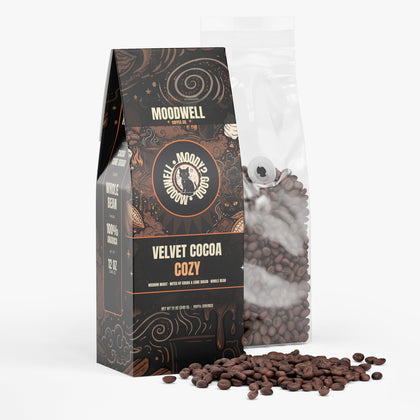
Cocoa and cane sugar with a hint of fruit, soft body and medium acidity from Colombia. Reads like a mocha in milk.
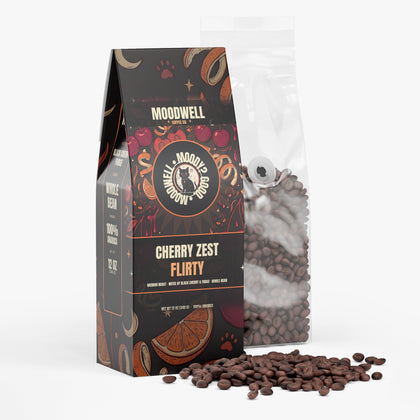
Black cherry, soft fudge and deep cocoa from Guatemala. The most fruit-forward medium roast we sell, so milk turns it into chocolate-covered cherries.
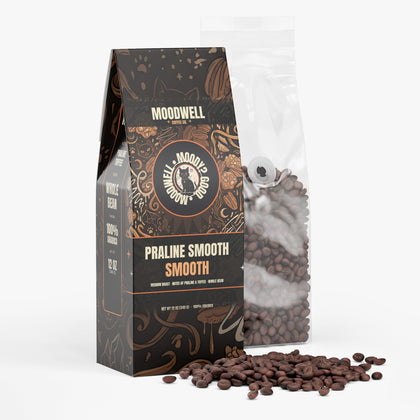
Nutty praline and gentle toffee with a mellow medium body. Easy to love and very forgiving.

Citrus, dried fruit and a sweet finish from Ethiopian, Mexican and Brazilian beans. Light roasts tend to taste sweeter and more delicate in milk.
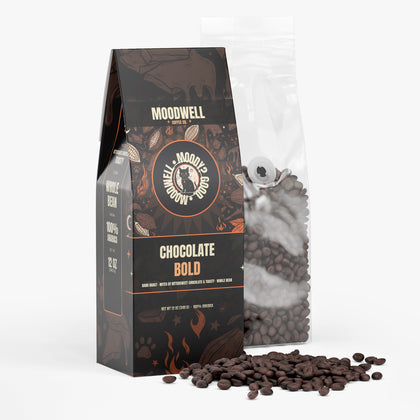
Bittersweet chocolate and a toasty finish at a dark roast. Sources warn dark roasts can clash with milk, so grind a touch coarser and stop early.

Swiss Water decaf with dark chocolate and earthy richness. Brew it overnight and sip it the next afternoon without the buzz.
Want a match based on your mood? Take the Mood Quiz or browse light, medium, dark and decaf roasts. Free shipping on orders of $40 or more.
Not sure what the notes mean? What coffee tasting notes mean · Light vs medium vs dark roast · Swiss Water decaf explained
Milk brew is coffee steeped in cold milk instead of cold water. You stir coarsely ground coffee into milk, refrigerate it for 10 to 16 hours, then strain out the grounds. The result is creamier and naturally sweeter than water-based cold brew, with a rounder body, and it is served over ice.
Most written sources trace the technique to Japanese specialty cafes, with Koffee Mameya in Tokyo and Kurasu in Kyoto named most often. The Korean connection is the wider trend: Korean cafe culture has fueled demand for rich, milk-forward drinks, and TikTok creators often call the method a Korean Japanese milk brew. Both are part of the story.
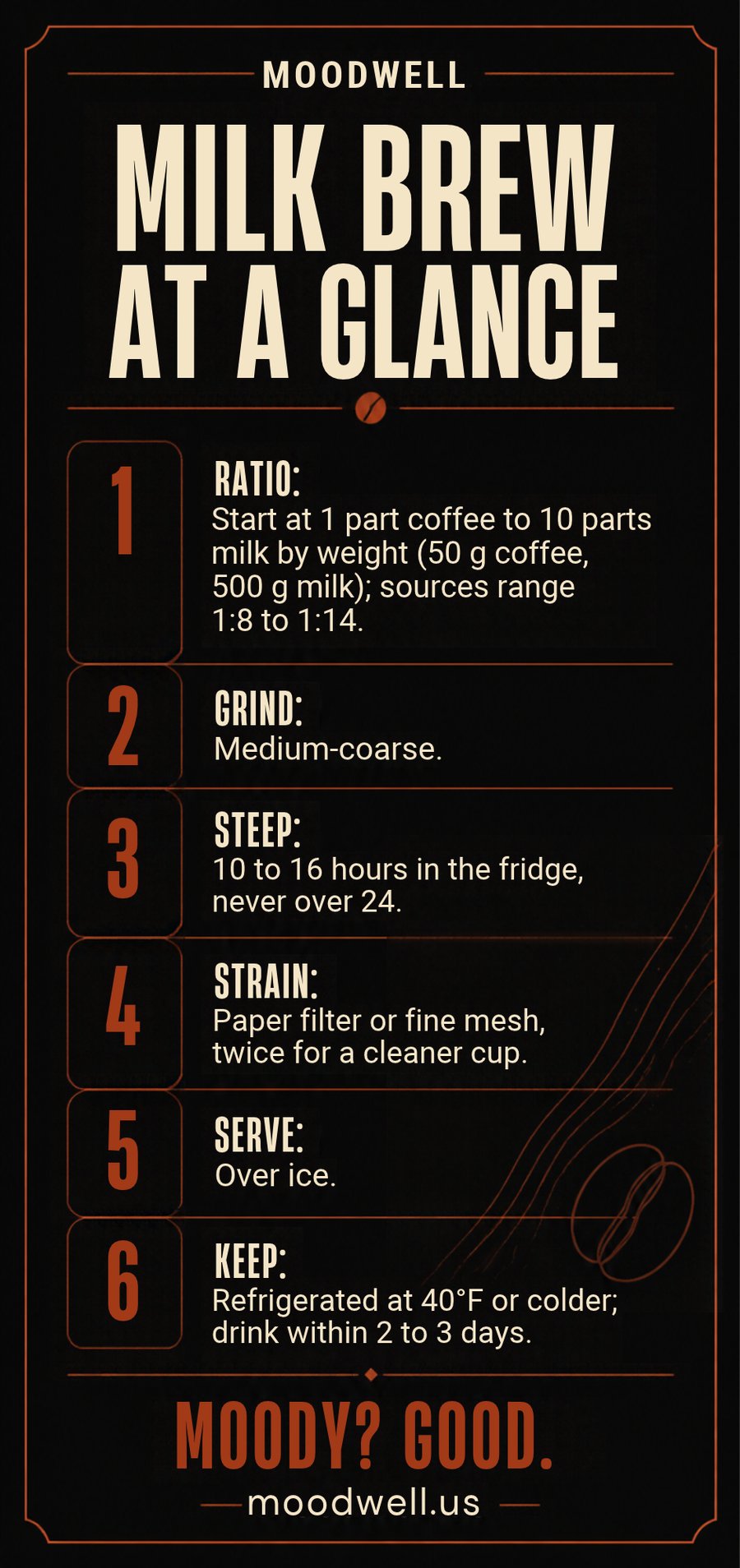
Start at 1 part coffee to 10 parts milk by weight, for example 50 g of coffee to 500 g of milk. Published recipes range from about 1:8 (stronger) to 1:14 (gentler). Go stronger if it tastes like plain milk, and gentler if it tastes harsh.
Steep it in the refrigerator for 10 to 16 hours, which means overnight. Sources agree that going much past 24 hours risks a bitter, over-extracted cup, and one recipe advises stopping at 14 hours. Plant milks may extract faster, so taste them early.
Yes, unless you steep the grounds in a tied filter, a tea ball or a French press. For the cleanest cup, pour slowly through a paper filter in a dripper, replace the paper if it clogs, and filter a second time if you see sediment. A fine mesh sieve lined with cheesecloth also works.
Light and medium roasts are the safest choice because dark roasts can clash with milk, although some brewers enjoy the bolder, nuttier result. For a mellow, nutty cup try a Brazilian medium roast like Golden Nut Toffee. For chocolate try Velvet Cocoa, for bright fruit try Fruity Bloom, and for evenings try Forest Decaf.
Whole milk gives the richest body and has extracted the most flavor in one cafe's tests. Oat milk is the most recommended non-dairy option, and vanilla oat is sweeter. Almond milk makes a thinner result. Any milk works, but fat helps the cup feel full.
Yes. Oat is the easiest swap and gives a creamy result. Almond and coconut add their own flavors and a lighter body. Because plant milks can extract faster, taste at about 8 hours the first time and strain when it reaches the strength you like.
Milk is perishable, so keep it refrigerated at 40 degrees F or colder at every step. One brewing guide says it keeps 3 to 4 days before it may turn sour. Our conservative rule of thumb is to finish it within 2 to 3 days, and to discard it if it smells sour.
Not necessarily. Strength depends on how much coffee you use per cup of milk, and milk brew recipes often use a stronger ratio than water cold brew. It tastes smoother and sweeter because milk softens bitterness. We could not find published caffeine measurements for milk brew, so treat the caffeine content as similar to other coffee made with the same amount of grounds.
You can steep in warm milk for a shorter time, around 6 hours in one recipe, but expect a less smooth and slightly more bitter result than the cold method. The cold fridge steep is what gives milk brew its mellow, sweet character.
The difference is heat and time. An iced latte adds hot-pulled espresso to cold milk and ice. Milk brew steeps coffee in cold milk for many hours, which extracts fewer bitter compounds and builds a fuller, sweeter body without any machine.
Bitter usually means the grind was too fine, the steep ran too long, or the roast was very dark. Use a medium-coarse grind and stop earlier. Sour or fermented flavors mean the batch is too old or was not kept cold enough, so use fresh milk and keep it at 40 degrees F or colder.
We read these before writing, and paraphrased rather than copying. Ratios and times differ between them, which is why we give ranges.
Images are AI-generated lifestyle images made with Google Gemini, the pour video was made with Google Flow, and the infographic and share image were designed in Canva. They are illustrations, not photos of customers or of Moodwell bags. Moodwell has no affiliation with the sources above.
Keep reading: Mushroom coffee 101 · Butterfly pea flower tea, the complete brewing guide · Dark roast vs light roast · Why coffee tastes like cherry or toffee · All guides